
Writing with a big update
Hub City Press to publish Kaylie Saidin's debut collection, Goose Update

Major literary news this week—Kaylie Saidin won Hub City Press’s 2026 C. Michael Curtis Short Story Book Prize. Her debut story collection, Goose Update, is due out next fall and quickly becoming Referential’s Most Anticipated of 2027.
I’ve had the pleasure of reading parts of this collection and cannot wait for readers to enjoy Kaylie’s bright and candid stories about young people in states of flux. Contest judge Catherine Lacey says of the book: “For fans of Miranda July and Bryan Washington, these darkly funny and wide-ranging stories are a study in the failures and confusions of young adulthood. The queer southern men and dramatic southern women who populate this world reveal the intricate betrayals and absurdities that can take place in friendships, marriages, and on the murky borders between socioeconomic classes.”
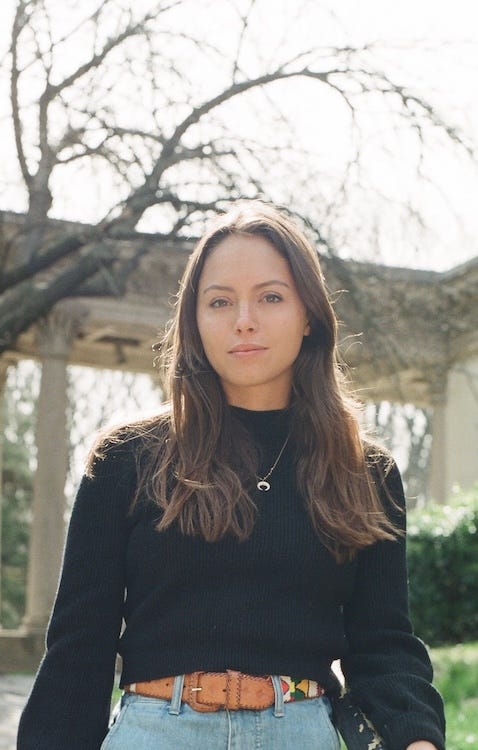
To celebrate the news, I’m sharing one of the earliest conversations I had on Referential with Kaylie. We spoke about her story, “The Frogs,” which appears in the book.
This was your second time in Oxford American. I love the story—where did it begin for you?
In the last semester of the MFA, I took an intro poetry workshop with Mark Cox. I don't consider myself a poet. I have a really hard time letting go of sentence structure. One of the exercises we had to do was to write stream of consciousness. I started writing about the apartment that Emily and Becca and I had lived in, which was in the woods behind Target. I didn't miss it because I’d moved to a much nicer apartment in a much better location, but in some ways I really did miss it. It was weirdly surrounded by woods, and I always heard frogs. When we moved, I never heard them.
It started as this meditation where I was writing about the way that that place felt. I wrote a number of terrible poems about that landscape. Years later, I returned to some of the free verse writing I had done, saw these characters, and then it turned into a bigger fiction.
I have to ask, do you ever write poetry now? What did that class teach you?
That I don't have what it takes. [Laughs] I write poetry occasionally when I'm feeling very dramatic, and I write it as a personal process. I don't submit poetry or anything. It's mostly that I don't see myself as a poet. I don't feel like my poems express what I'm trying to say as clearly as fiction does.
I feel that. It’s nice to have something that’s only for you. Once I've written a story, I can feel like I've invested this time, I want to try to publish it, and with a poem, it can be nice to think, this is just for fun.
Yeah, it's nice to have that. I think the more you publish, the more that you're writing stories, you're thinking about publication without being able to avoid it—it’s always something in your mind. It's good to have a medium where you're like, this is just for me and absolutely no one's ever going to see it.
What was your process with The Frogs like? Were there any craft elements you found challenging in writing it, or was there anything you were excited to focus on?
I wrote the first two pages, and it felt very, ramble-y. It started as this sort of poetry, nonfiction meditation. I struggled to believe that this story where nothing really happens would be interesting. I wrote the first two pages and put it down for a long time.
I went back to it and decided to just finish it, because it felt like there was something more with the characters. It ended up being a story about queer desire, which I didn't intend for it to be, but all of my work ends up being that way. Then I had these images of the frog being this centerpiece of knowledge.
The more that you're writing stories, you're thinking about publication without being able to avoid it—it’s always something in your mind. It's good to have a medium where you're like, this is just for me and absolutely no one's ever going to see it.
I think too I knew very early on that it was a story about the aimlessness of your early twenties, when you get out of college and feel like, wait, what are you doing? I wanted to communicate that feeling. I didn't think it would be published anywhere, so I was surprised when Oxford American picked it up. They helped me in minutely raising the stakes and bringing to light the environmental themes.
Could you speak about what that editorial process was like?
I worked with Sara A. Lewis on my first publication with Oxford American. She's a very smart editor and very good at pinpointing specific places and not necessarily leaving it all in the writer's hands. She'll say, what if this character did this, or here are some ideas and options, which is not an experience I've had with other editors. I like that process and find it really collaborative.
It’s interesting how different editor’s approaches can be. Sometimes a story is accepted, you never hear from them, and then it’s on their website. Other times, it’s very thorough.
Yeah, Sara is very thorough, and I appreciate that. The first story I published in The Oxford American was “The Tyrant.” That was a big process of Frankensteining two different drafts together. This one was less so, but there were a lot of meticulous overarching edits, and then the fact checking was huge. There was a big debate about frogs and toads and whether those can be used interchangeably. Herpetologists aren’t in consensus. There's a lot of infighting in that world, so I didn't realize I was entering these murky waters.
I always love the way you write about place. This story very clearly evoked Wilmington sitting on the edge of a big change. How were you thinking about setting?
In the beginning, I wasn't thinking of it as a story of internal change so much as one of external change. The narrator is afraid of internal change, afraid of moving in any direction, and afraid of her roommate moving in a direction away from her, but everything around her is externally changing. I’ve always felt that way living in Wilmington. I felt the way in New Orleans. I think that the effects of climate change feel pretty significant in the South in a way that they maybe don't in the rest of the country. Humidity and rapid temperature increases are more seriously felt and seen here. Living on the coast, oceanic patterns are changing in really obvious ways. As a surfer, I notice those things pretty acutely. I think the South will be and is one of the first places where the serious ramifications of climate change are being seen and felt, so it has always felt that there's the inability to be stagnant because the natural landscape around you is changing significantly.
The development of Wilmington felt that way, too. There are these huge areas of town that were woods where we would walk Becca's dog. The old apartment is surrounded by other apartments now, but at the time, it was the only one back there in those woods behind Target. There were literally coyotes in the woods. I doubt that they’re there now.
I also want to ask about your relationship to autofiction. I know you’re playing with it now.
I am playing with autofiction now, but my relationship to autofiction has been like an “it's complicated” Facebook status. My MFA thesis, which was really heavily inspired by my teenage years, began so much as autofiction and deviated in a lot of ways. I became further and further away from the narrator, which I think was ultimately a good thing for the narrative.
Everything around her is externally changing. I’ve always felt that way living in Wilmington. I felt the way in New Orleans. I think that the effects of climate change feel pretty significant in the South in a way that they maybe don't in the rest of the country.
I think that most of my first drafts do start off as some variations of autofiction, or many of them do. My process has been to start that way and then deviate and move further into the realm of fiction, but everything has this emotional reality to it.
I think this story is probably more in the lens of autofiction than other work I've published. “The Tyrant” is about an older woman expecting a child; when I wrote it, I was 22 and had no idea what that was like. “The Frogs” is a lot closer to reality both in setting and in the narrator. I don't feel like she's me. I think in autofiction, you do have that distance, but it's closer. I'm trying to get better at it. I think in some ways, I’ve hidden behind fictionalizing things for reasons that maybe aren't actually necessary for narratives. I went back and read the very first draft of my thesis compared to the end draft. I don't think the first draft was better, per se, but I do feel like there was a significant amount of emotional truth in it that is pared down in the final draft.
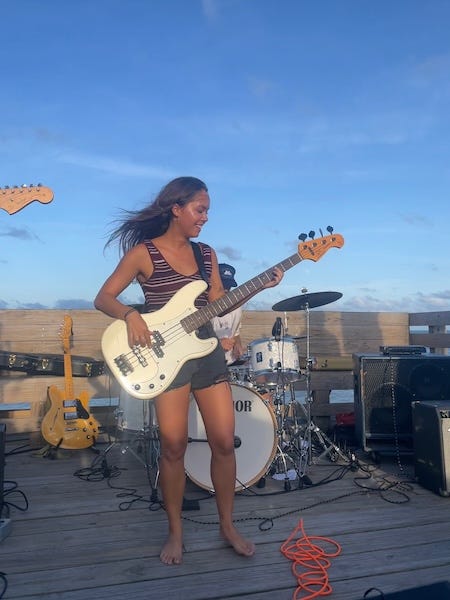
That novel is about these high school girls in a band in the Bay Area. You play music as well. How does music complement your relationship to writing?
I think music for me feels so exciting because it’s something you do with other people. I'm not a solo musician. I play music because I enjoy doing it with other people, and I've always been that way. I was bad about practicing by myself but good at practicing with other people. Writing feels so solitary, but I'm pretty social, and it can be refreshing to create art with other people in a more active moment.
Specifically with music and my thesis, I was thinking a lot about the ways that a band creates this web of interpersonal dynamics. I think that anytime you have an artistic project where there's a lot of people, it's like being in a relationship with all those people. We've seen a lot of literature about bands, like Daisy Jones and the Six. I was just in New York and saw this play called Stereophonic about this band recording their album and the various webs of complicated issues and dynamics and fighting. I think I take a lot of inspiration from the interpersonal dynamics of being in a band.
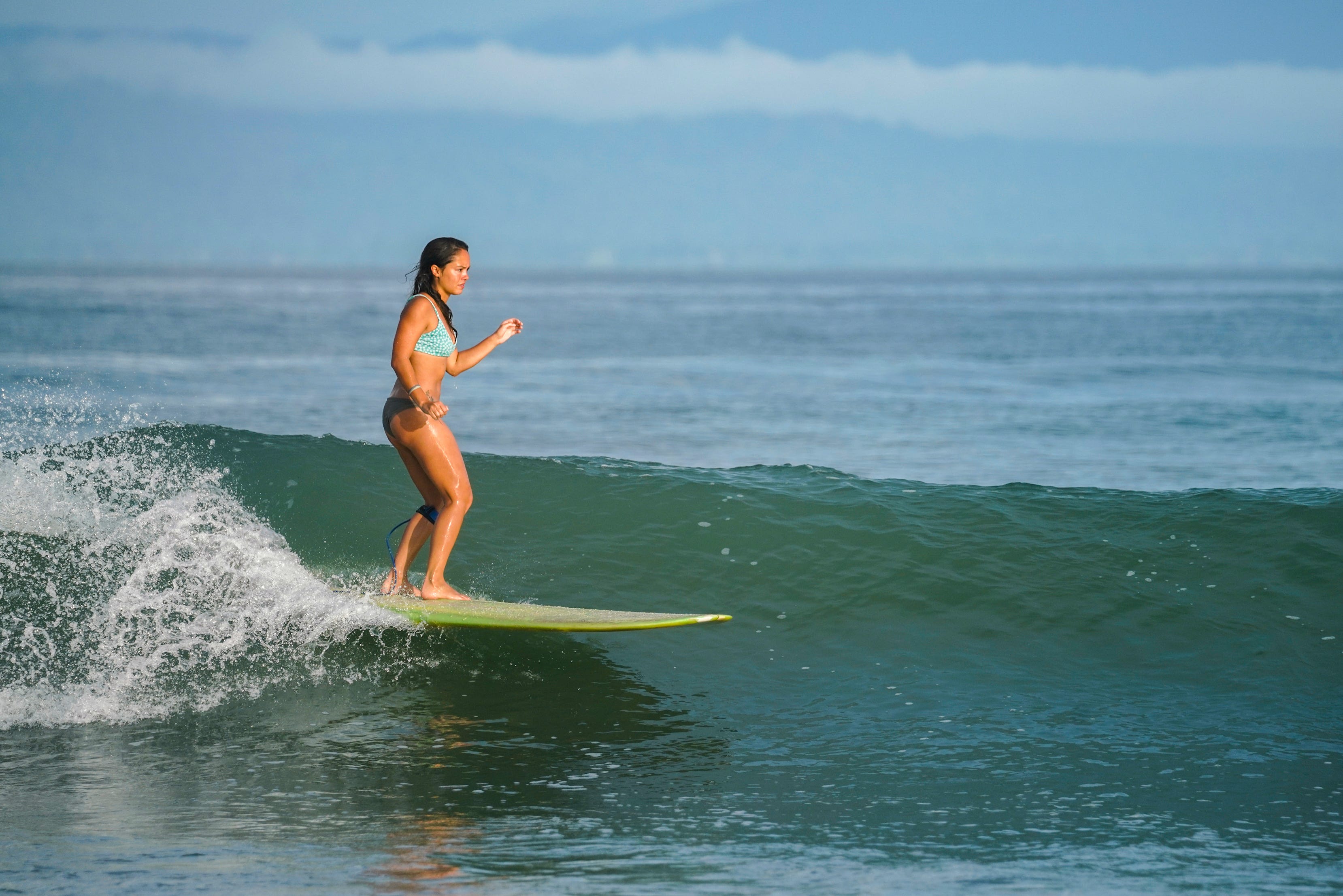
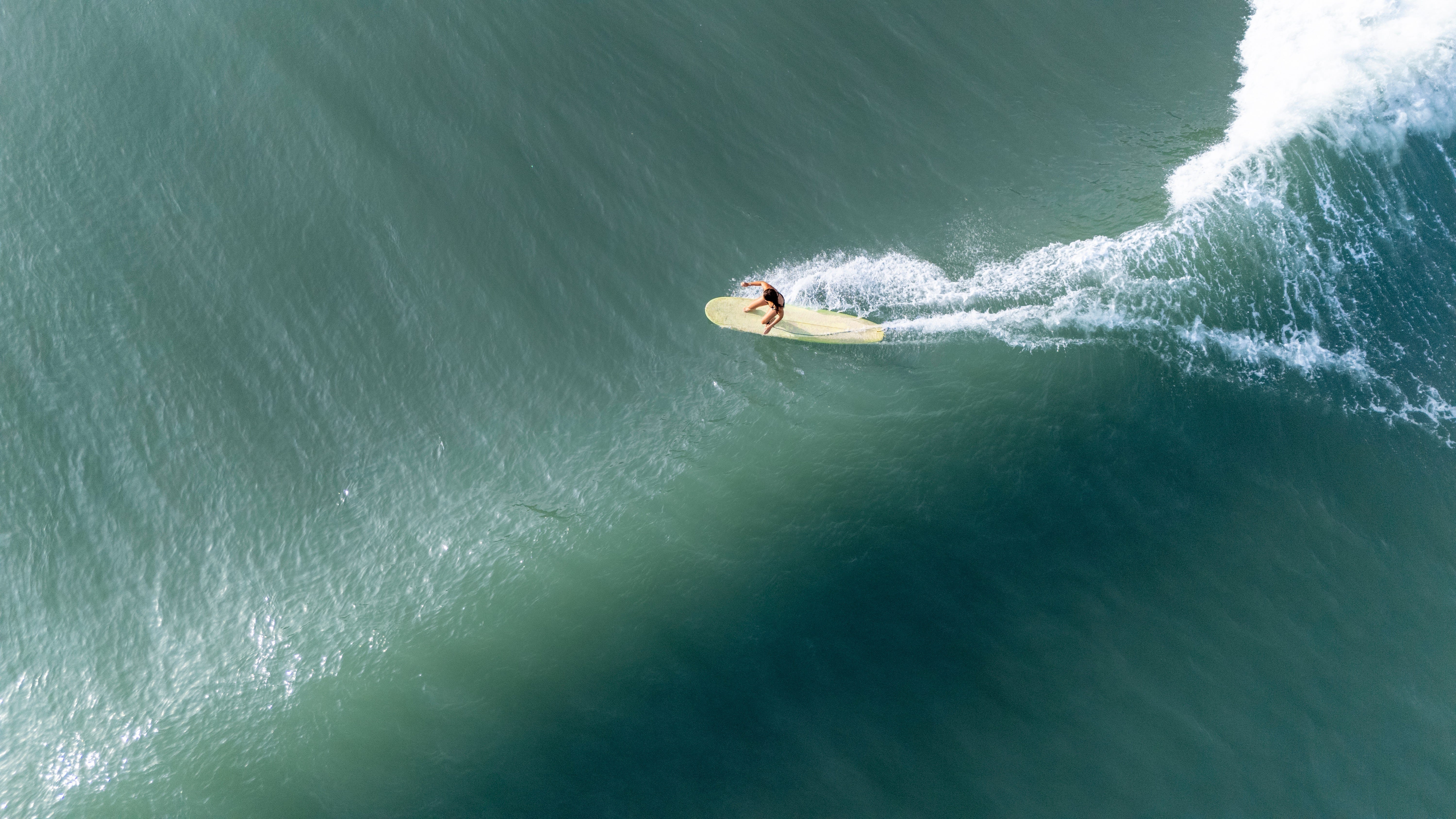
When I think about you as a creative person, you have these very distinct practices, and surfing feels important too. How does it fill the well, or is it totally separate?
I think about this a lot because I've been told I should write about surfing a number of times, but I never really do, or it doesn't come naturally. When I try to, it feels weird and false. There's not actually expansive surf literature in the realm of literary fiction, and I've always wondered why. It feels like this untapped space, but I also have this weird inaccessibility to it. I don't feel like I'm writing about it in any reasonable way.
It is really one of those moments where you're thinking about nothing else, and I think for the hyperactive brain that can be very calming.
On a personal level, I've come to acknowledge I have an addictive personality, and surfing is one of those sports like climbing where it's this huge adrenaline rush when you're riding the wave. For me, surfing is almost a meditative space. I think about writing when I'm out there, but sometimes I don't think about anything except for the physical act that I'm doing. In the rest of my life, I feel like there's stuff happening in my head all the time, especially relating to stories. When I’m playing music or teaching, I'm thinking about what I should be writing. Surfing feels like this separate space. It's very in the moment. It sounds cliche, but I think it is really one of those moments where you're thinking about nothing else, and I think for the hyperactive brain that can be very calming.
I love hearing you say that. I feel that same way with yoga. It makes me focus on something else in a deep way.
I think it's important for creatives to have a space where they're not trying to make meaning of everything,
Read “The Frogs” and check out more of Kaylie’s work here.
Reference Section
Currently reading: Late Fame by Arthur Schnitzler. Recommended by a friend, this book responds to the very specific anxieties I’m finding in this moment of change in the industry, yet it does so from the vantage of 1800s Vienna. A group of young people fall in love with an older writer’s only book of poetry, long ignored by the mainstream, prompting all manner of questions on talent and how to work creatively within the confines of the industry.
For The Portland Press Herald, I interviewed Anna Konkle about her memoir, The Sane One. We spoke about her relationship with her father, becoming a parent, and the creative freedom she found writing Pen15. I’m a major Pen15 fan, and speaking with her was such a treat.
Absurdism was a lightbulb, and I think we got to marry tragedy and comedy with absurdism. That engine in my work happened to be about writing authentically about outsiders and the outsiders within us. Once we were in the writers’ room, it was partly about convincing others, which was also trying to convince ourselves, why these outsider stories were important. It didn’t begin as a feminist endeavor, but the more that we identified storylines that weren’t being told, the more political it became. We didn’t expect people to be as candid as we were being. We were the ones that needed to be the most humiliated in the room every day to get the stories out.
Note: I earn a small commission when you shop for books through my Bookshop links, which helps support Referential’s free subscriptions.